

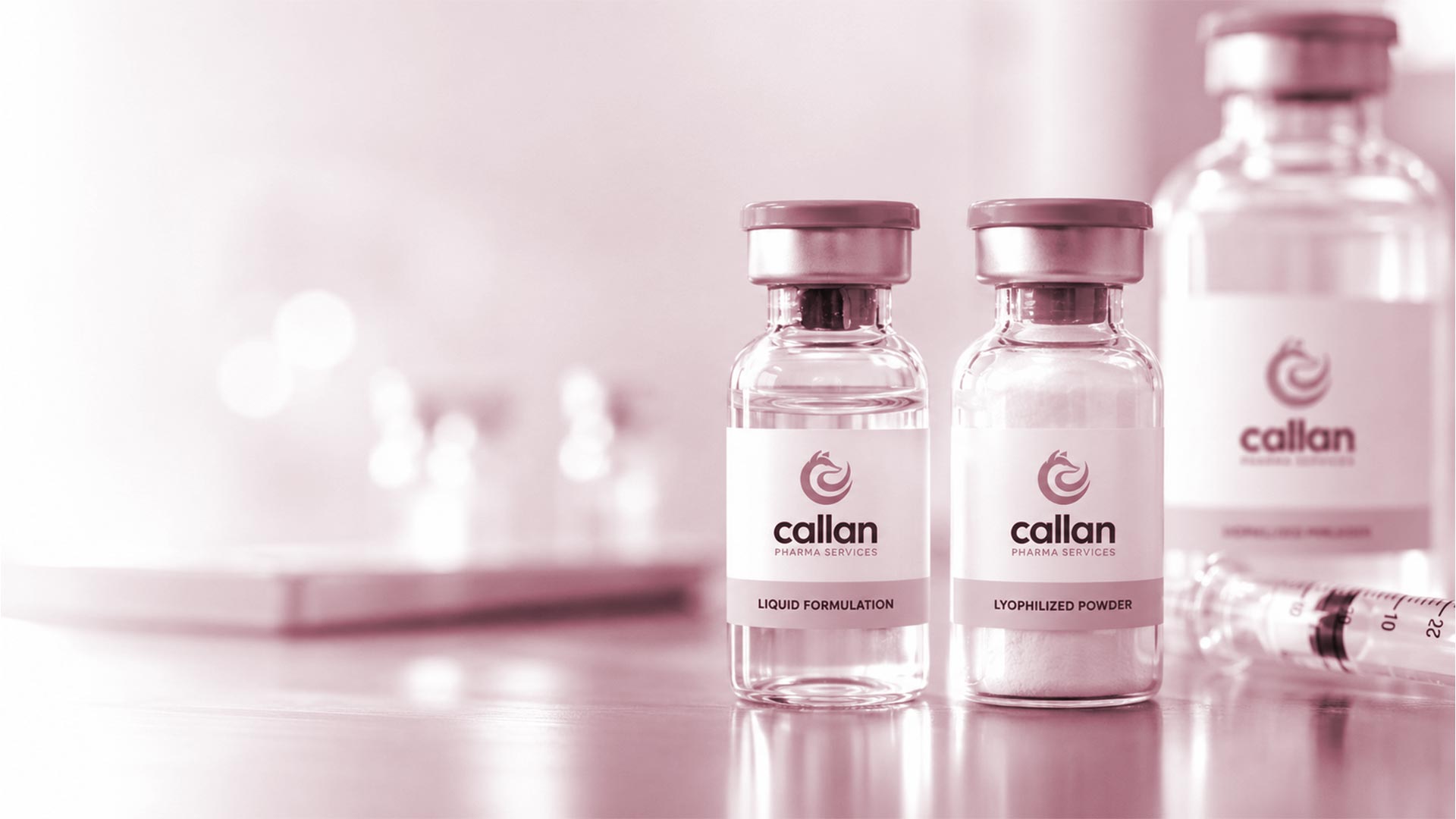
Teams can spend too long trying to rescue a liquid by screening buffers, excipients, and formulation techniques, when the real question is whether the product should still be a liquid at all.
Three signs it may be time to reconsider the liquid dosage form:

Bradford Sullivan, PhD
Vice-President & Co-Founder
Callan Pharma Services
Lyophilization is not automatically the answer. But when the current liquid is starting to limit the program, it is worth asking three things early: is stability pointing to a dosage-form change, is the liquid no longer giving you meaningful IP differentiation, and are frozen or ultra-cold logistics starting to make it impractical?
1. When Poor Solution Stability Starts Driving the Program
Poor solution stability is one of the clearest reasons to reconsider a liquid. Sometimes that shows up as water-driven degradation of the drug and a growing purity problem. Other times, it shows up as material falling out of solution or excipients degrading over time; the latter can quietly become part of the reason the drug is degrading too.
In those situations, a team can spend a long time screening buffers, excipients, and formulation techniques when the better question is whether the product should still be a liquid at all. The most useful way to answer that question is usually empirical: pressure-test a lyophilized option and characterize what happens before and after the dosage-form change. That is ultimately a formulation-development decision, not just a stability-screening exercise.
2. When the Liquid No Longer Gives You Meaningful IP Differentiation
Sometimes the problem is not just technical. It is that the liquid formulation is no longer giving the program much room to differentiate itself in a crowded market. This is especially true in reformulation programs, including 505(b)(2)-type strategies. If the formulation space is already crowded with solution-based approaches, continuing to optimize the same liquid may improve the product without doing much to strengthen the IP position.
That is when a dosage-form change can become strategically useful as well as technically useful. Moving from a liquid to a lyophilized presentation can create a more differentiated formulation path, especially when it is paired with meaningful formulation or process development work. The point is not that lyophilization automatically creates patentability. It is that a dosage-form change can sometimes move the program into a less crowded space and give the team a better opportunity to build a more defensible position.
3. When Frozen or Ultra-Cold Logistics Are Becoming Impractical
Sometimes the liquid formulation is technically workable, but only if the product stays frozen or ultra-cold from manufacturing through storage, shipping, and use. At that point, the limiting problem may no longer be the formulation itself. It may be the operational burden required to keep the liquid viable.
That is when a lyophilized presentation becomes worth evaluating. If a dosage-form change can reduce cold-chain dependence, improve storage flexibility, or make shipping less fragile, it can solve a real development problem even when the liquid is not “failing” in the traditional sense. This matters even more for products intended for emergency use, low-resource settings, or remote areas, where frozen logistics may be unrealistic or too risky to rely on. Once the supply chain starts becoming part of the product risk, dosage form deserves to be part of the development discussion.
The Strategic Takeaway
A liquid formulation can be good enough to progress a program and still not be the right long-term dosage form. The hard part is recognizing when the work being done to preserve the liquid is no longer creating meaningful value. That is usually the moment to stop asking how to optimize the current formulation and start asking whether the program would be better served by a different dosage form altogether.
If you’re weighing a move from liquid to a lyophilized presentation, let’s talk.
Frequently Asked Questions
When should you switch from a liquid to a lyophilized formulation?
Consider a dosage-form change when poor solution stability keeps driving the program, when the liquid no longer offers meaningful IP differentiation, or when frozen or ultra-cold logistics become impractical. In each case the limiting problem may be the dosage form rather than the formulation, and a lyophilized option is worth pressure-testing empirically.
Does lyophilization improve drug stability?
It often can, particularly when instability is water-driven or caused by excipient degradation in solution. Removing water can slow or stop those degradation pathways. The most reliable way to know is to pressure-test a lyophilized option and characterize the product before and after the dosage-form change rather than assume the benefit.
Can a dosage-form change strengthen IP position?
Sometimes. In crowded, solution-based formulation spaces, including 505(b)(2)-type strategies, moving to a lyophilized presentation paired with meaningful formulation or process development can shift the program into less crowded space and support a more defensible position. Lyophilization does not automatically create patentability, but it can open a differentiated path.