
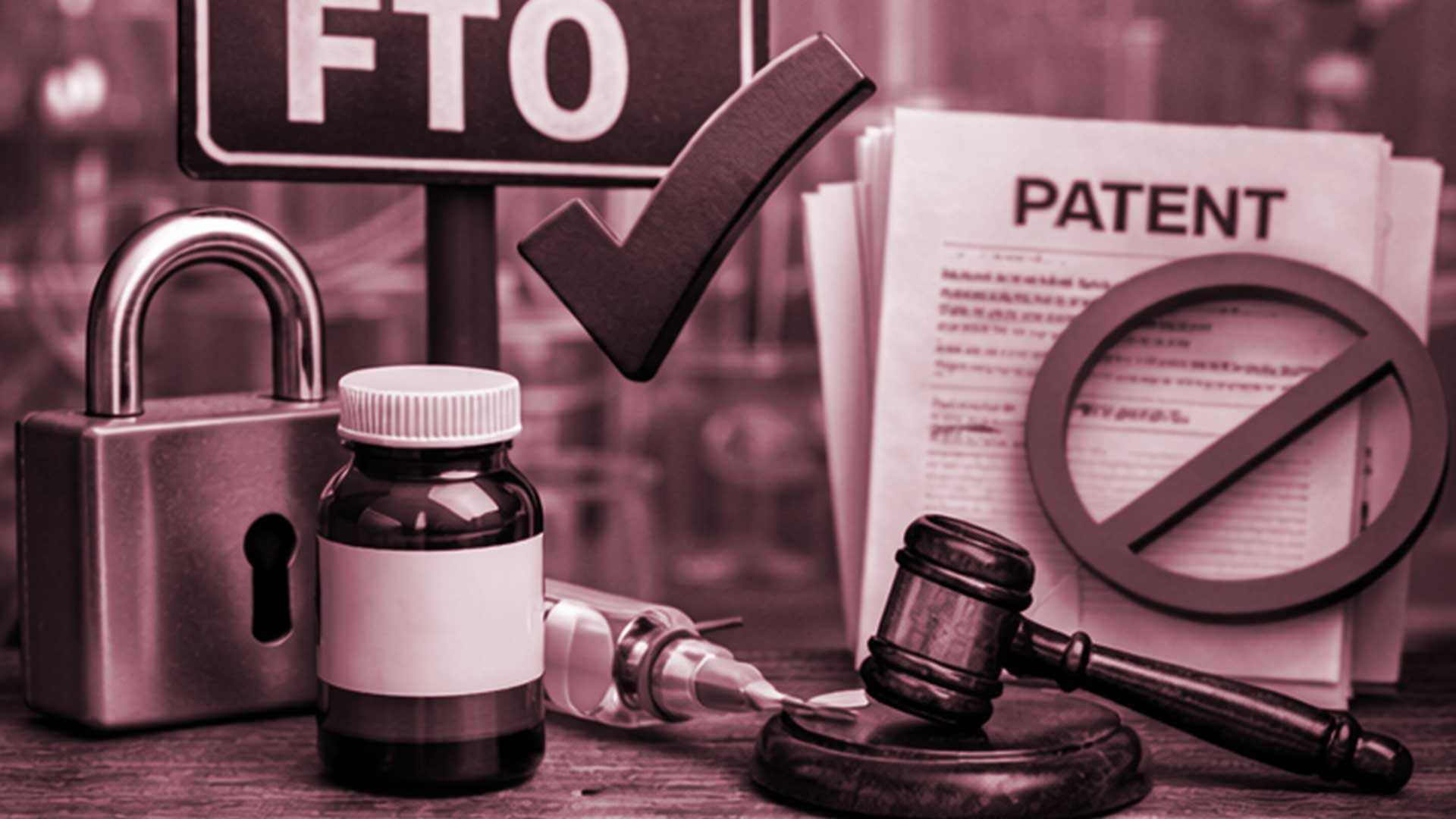
Despite how central it is, many people still confuse patentability with freedom to operate (FTO).
A patent is a right to exclude, not a permission slip. It can protect your drug product, formulation, or process—and help you stop others from making, using, or selling it. But it doesn’t guarantee you can launch. Commercialization still depends on whether your product (or process steps) fall inside someone else’s claims—i.e., whether you have freedom to operate.

Bradford Sullivan, PhD
Vice-President & Co-Founder
Callan Pharma Services
Patentability is offense. Freedom to operate is defense.
An FTO analysis is jurisdiction- and time-specific, and it depends on the scope of in-force claims—not the abstract or the specification (written description).
Quick example (how you can have a patent and still lack FTO):
Imagine you’re researching a new injectable formulation of a poorly water-soluble API. You discover that (1) adding Excipient A (0.5–1.0%) plus (2) incorporating a high-energy mixing step (e.g., high-shear mixing) prevents precipitation and enables a stable 50 mg/mL solution.
Great news—now you file a patent on:
- The formulation: the poorly water-soluble API + Excipient A in a defined range of 0.5–1.0%
- The process: order of addition + high-energy conditions that make it stable at an elevated concentration range of 40–60 mg/mL
Even better, the USPTO determines your formulation and process are new and non-obvious and grants the patent!
But here’s the catch:
A competitor may already have an earlier, broader patent that claims something like:
- Any injectable formulation of the poorly water-soluble API with a solubilizer from Excipient Class X (which includes your Excipient A) at 0.1–5%.
- A method of making a stable injectable solution using high-energy techniques (which includes your high-shear mixing step).
The upshot is this:
Getting a patent means your improvement was new and non-obvious enough to protect. It doesn’t mean you’re clear to commercialize. If your product—or the way you make it—falls within someone else’s earlier patent claims, you may not be able to launch without a license or a design-around. That’s how you can have a patent and still not be free to operate.