


Introduction:
Nanotechnology in the Pharmaceutical Industry
Part 1 of 4: Polymeric Nanoparticles
“Nanotechnology” and “nanoparticles” in the pharmaceutical industry are broad terms, used to describe a range of modern drug delivery approaches. These technologies aim to address limitations of conventional formulations—such as low aqueous solubility, rapid systemic clearance, off-target toxicity, low cellular uptake, and poor drug or excipient stability—by enabling more controlled, targeted, and sometimes longer-acting delivery of therapeutics.
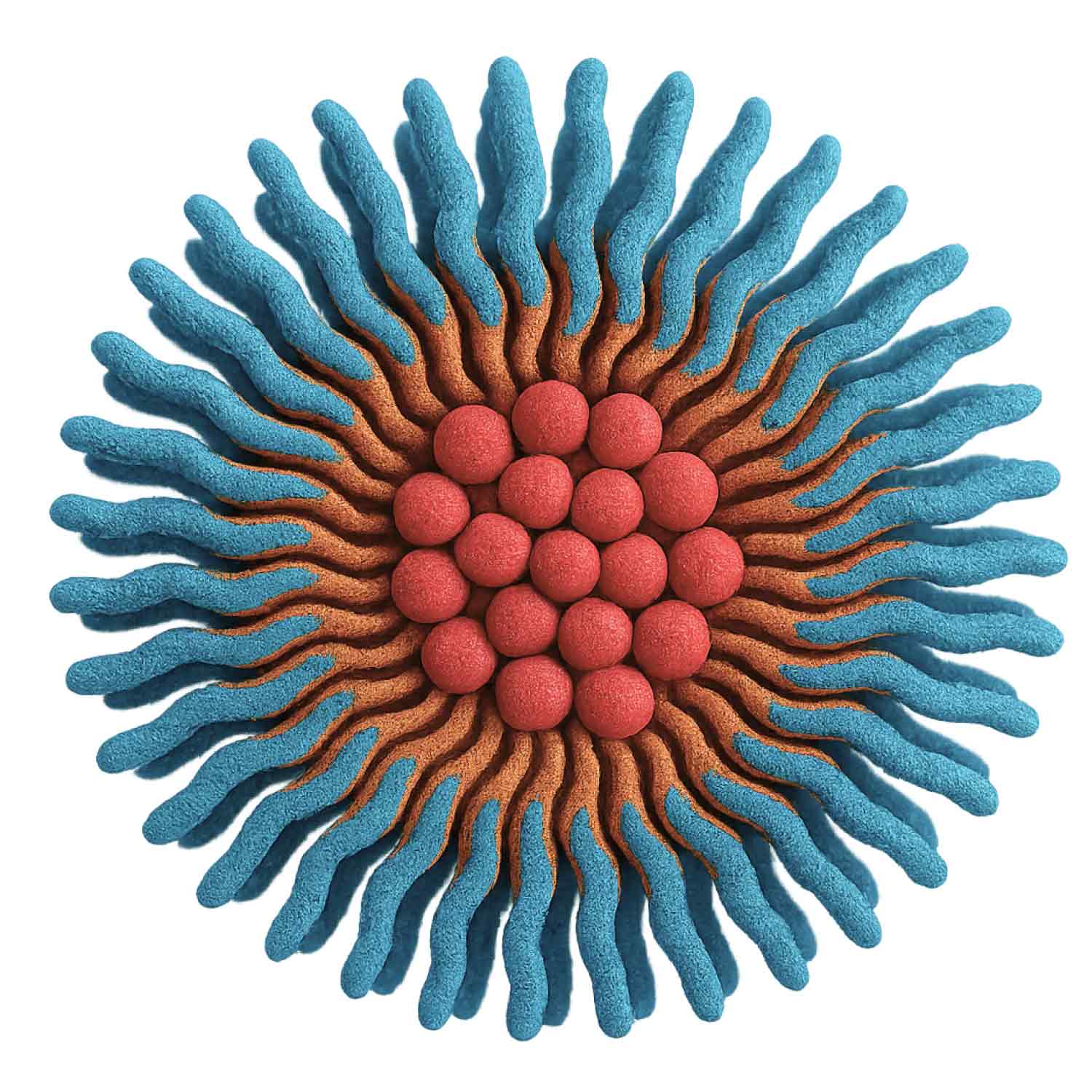
Nanotechnology in the Pharmaceutical Industry
Part 1: Polymeric Nanoparticles in Drug Delivery: Design, Benefits, and Emerging Trends
Part 4: Inorganic Nanoparticles – Core Materials, Clinical Examples, and Emerging Theranostics
Part 1: Polymeric Nanoparticles in Drug Delivery: Design, Benefits, and Emerging Trends
In drug formulation development, even highly promising APIs are often limited by familiar hurdles—poor aqueous solubility, rapid clearance, off-target toxicity, and challenging tissue targeting. Nanotechnology-based drug delivery systems aim to tackle these barriers. Polymeric nanoparticles are one of the most versatile tools in this space. By combining a drug with a biodegradable polymer matrix or micelle-forming copolymer, formulators can tune pharmacokinetics, stability, and targeting while staying within well-understood material classes.
This is Part 1 of our 4-part series, where we focus on polymeric nanoparticles—what they are, common design approaches, and how they’re used in real products and emerging technologies.
What Are Polymeric Nanoparticles?
Polymeric nanoparticles are nano-sized structures (typically on the order of a few tens to a few hundred nanometers) composed of a drug and a polymer. In this article, we use the term to refer to systems where the drug is associated non-covalently with the polymer, in contrast to polymer–drug conjugates where the two are covalently linked. The drug may be:
- Encapsulated within a polymer matrix or core
- Adsorbed or complexed onto a polymer surface
- Entrapped in the hydrophobic core of self-assembled polymeric micelles.
The polymers employed can be:
- Naturally derived from plant, animal, or microbial sources
- Semi-synthetic, chemically or enzymatically modified natural polymers
- Fully synthetic, prepared by polymerization of man-made monomers, often derived from petrochemical feedstocks
Through careful polymer selection and formulation techniques, formulators can create a variety of particle architectures—polymeric micelles; micro- or nano-spheres; and nanocapsules. Related nanoscale delivery systems such as nanosuspensions and nanoemulsions can also be stabilized by polymers but are classified separately and will be discussed in Part 3 of this series.
Common Types of Polymeric Nanoparticles
1. Polysaccharide-Based Nanoparticles
Polysaccharide-based nanoparticles leverage carbohydrate polymers to create biocompatible, highly functionalizable carriers for small molecules and biologics.
Examples of polymers
- Cellulose and derivatives
- Chitosan and derivatives
- Hyaluronic acid
- Cyclodextrins (e.g., Captisol®; sulfobutyl ether β-cyclodextrin)
Pros:
- Excellent biocompatibility and biodegradability, often via enzymatic cleavage of glycosidic bonds
- Abundant functional groups for chemical modification and targeting ligands
- Attractive for parenteral and ophthalmic applications
Drug Product Example:
VEKLURY® (remdesivir): an intravenous antiviral formulation in which the poorly water-soluble API is solubilized using sulfobutyl ether β-cyclodextrin (Captisol®). The cyclodextrin forms solubilizing inclusion complexes with remdesivir, enabling a clear aqueous infusion.
2. Poly(amino acid) and Protein-Based Nanoparticles
Poly(amino acid) and protein-based systems can assemble into nanoparticles or micelle-like structures where hydrophobic domains sequester drug cargo and hydrophilic regions interface with the biological environment.
Examples:
- Serum proteins (e.g., albumin)
- Animal proteins (e.g., gelatin and silk fibroin)
- Poly(sarcosine) and poly(glutamic acid)-based polymers
Pros:
- High biocompatibility and biodegradability—the building blocks are amino acids
- Favorable immunogenicity profile when well sourced and designed
- Flexible backbone chemistry for hydrophobic blocks and targeting groups, which is the hallmark feature of the poly(amino acids)
Drug Product Example:
ABRAXANE® (nab-paclitaxel): an albumin-bound nanoparticle formulation of paclitaxel, using human serum albumin to solubilize the poorly soluble drug. This allows for the parenteral delivery of paclitaxel without the need for the Cremophor®-based solvent system (i.e., Taxol®).
3. Poly(ester) Nanoparticles
Poly(ester) nanoparticles typically form solid matrices or micro-/nanospheres, but can also assemble into block copolymer micelles in which degradable polyester segments act as hydrophobic cores for sustained drug delivery.
Examples:
- Poly(lactic-co-glycolic acid) (PLGA)
- Poly(lactic acid) (PLA), subdivided into PLLA (semi-crystalline) and PDLLA (amorphous) polymers
- Polyester block copolymers (e.g., PLA-poly(ε-caprolactone))
Pros:
- Well-established regulatory precedent across multiple approved products
- Tunable degradation rate by adjusting monomer ratio, molecular weight, and end-groups for controlled-release formulations.
- Well-suited for microspheres, nanoparticles, and implantable depots
Drug Product Example:
RISPERDAL CONSTA® (risperidone): is a long-acting intramuscular depot formulation in which risperidone is encapsulated in biodegradable PLGA microspheres. In vivo PLGA degradation provides sustained drug release over approximately two weeks, enabling maintenance therapy for schizophrenia and related disorders with infrequent dosing.
4. PEG-Based Polymeric Micelles and Block Copolymers
PEG-based polymeric micelles and block copolymers self-assemble into classic core–shell micelles, with a hydrophobic core that solubilizes poorly water-soluble drugs and a PEG corona that stabilizes the particles and modulates in vivo behavior.
Examples:
- PEG-Poly(amino acid) (e.g., PEG-poly(glutamic acid))
- PEG–PLA (poly(ethylene glycol)–poly(lactic acid))
- PEG–PLGA (poly(ethylene glycol)–poly(lactic-co-glycolic acid))
Pros:
- Improve aqueous solubility of hydrophobic APIs via encapsulation in the hydrophobic core of an amphiphilic block copolymer.
- Highly tunable chemistry, with many amino acid side-chain variations available to adjust solubility, drug loading, and pharmacokinetics.
- Enable fine control over particle size, circulation time, and tissue distribution
Drug Product Example:
GENEXOL-PM® (paclitaxel): another Cremophor®-free paclitaxel formulation in which the drug is encapsulated in PEG–PLA polymeric micelles. The hydrophobic PLA core solubilizes paclitaxel, while the PEG corona stabilizes the micelles in aqueous media. The PEG–PLA to paclitaxel weight ratio is roughly 8:1, corresponding to ~11-fold less excipient per unit paclitaxel than the Cremophor EL to paclitaxel ratio in TAXOL® (excluding ethanol).
Key Advantages of Polymeric Nanoparticles
An extremely tunable and versatile class, polymeric nanoparticles can offer:
- Improved solubility for poorly water-soluble APIs
- Controlled or sustained release over hours to months, depending on polymer(s) used, formulation technique used, and architecture
- Extended circulation half-life and reduced dosing frequency versus non-nanoparticle-based formulations
- Improved tissue exposure, including opportunities to harness the EPR effect in solid tumors and achieve sustained, depot-style release at the site of administration.
- Reduced excipient-related toxicity and improved tolerability by replacing harsh solvents/surfactants with biocompatible polymers.
- Lifecycle management opportunities, especially true for the emerging poly(amino acid)-class of polymers, including new IP claiming drug product composition of matter and release control
Formulation Design Considerations & Challenges
Designing a robust polymeric nanoparticle product requires careful balancing of polymer chemistry, process parameters, and clinical use case. Some key considerations:
Polymer Selection
- Biocompatibility and biodegradability (e.g., PLGA vs poly(amino acids) vs polysaccharides)
- Regulatory and compendial status of the polymer(s) used
- Potential immunogenicity or hypersensitivity risks with PEG-based excipients delivered parenterally (e.g., growing concern surrounding anti-PEG antibodies)
Drug Loading and Release Profile
- Target drug loading to meet dose and volume constraints for injectables (especially subcutaneous), and delivery challenges related to topical ophthalmic products.
- Control of release kinetics (burst vs sustained) through polymer composition, particle size, and formulation technique.
- Impact of morphology (micelle vs nanosphere or microsphere) on pharmacokinetics
Particle Size and Surface Properties
- Hydrodynamic size and polydispersity, optimized for micelle stability, manufacturability, and consistent biodistribution (e.g., tumor versus reticuloendothelial system (RES) uptake).
- Corona composition, surface charge, and hydrophilicity/hydrophobicity, which govern protein adsorption, opsonization, circulation time, and clearance for polymeric micelles.
- Micellular and chemical stability under storage and in-use conditions, including resistance to aggregation, micellular disassembly, and drug degradation.
Route of Administration and Clinical Use Case
- Route-specific micelle design (IV vs SC; intravitreal vs topical), including limits on volume, viscosity, and polymer/drug load.
- Local tissue constraints and excipient tolerability (joint space, vitreous, ocular surface) informing micelle size and composition.
- Target profile: rapid vs sustained exposure, mapped to micelle architecture, drug loading, and potential depot-like behavior at the injection site.
Analytical and Manufacturing Complexity
- Advanced analytical methods (e.g., DLS, SEC, and HIAC) to characterize micelle size, PDI, drug loading, and particle count for injectables.
- Robust, scalable micelle formulation techniques (e.g., high-energy techniques, including microfluidics) with tight control of critical process parameters.
- Parenteral-quality controls, including sterility strategies and limits on residual solvents and particulates.
Emerging Technology Spotlight: Poly(Amino Acid) Polymers Like Apisolex™
Poly(amino acid)–based polymers are emerging as a particularly versatile class of excipients for nanoparticle formulation. Built from biocompatible, biodegradable amino acid–derived units, they allow independent tuning of hydrophilic and hydrophobic blocks to achieve high loading of poorly soluble APIs.
Within this space, Apisolex™ has become the leading clinical-stage platform—a GMP-validated, injectable-grade, poly(amino acid) excipient specifically developed to enable high-concentration parenteral formulations of BCS Class II and IV drugs.
Apisolex™, Key Structural Features:
- A hydrophilic poly(sarcosine) block that replaces traditional PEG-based polymers—an increasingly important advantage as anti-PEG antibodies and PEG-related hypersensitivity drive demand for PEG-free parenteral systems.
- A hydrophobic tyrosine/D-leucine block in which the deliberate mix of D- and L-amino acids suppresses ordered secondary structure, yielding a flexible, random-coil block that can more effectively pack around and encapsulate hydrophobic drugs.
Apisolex™ Technology – Practical Advantages
- High-performance solubility enhancement – up to ~50,000-fold increases for certain BCS II/IV APIs.
- Extended IP runway – robust composition-of-matter protection around block design and architecture.
- De-risked, clinical-stage platform – backed by GMP manufacturing and an Apisolex-enabled injectable currently in Phase 1 trials.
For sponsors, these attributes translate into a de-risked path to high-concentration, PEG-free injectable products with clear differentiation versus legacy solubilization approaches. Our team helps clients evaluate Apisolex™ through quick feasibility studies linking formulation design, CMC strategy, and IP/lifecycle planning.